For over twenty years, GNU/Linux has been the primary operating system on my home computers. My philosophy is simple: when I look for software, my first choice always falls to the Open Source counterpart, even if it sometimes requires a bit more configuration or turns out slightly less “polished” than some proprietary solutions.
For three years now, I have chosen to take a further step: to regain total control of my data. In this journey, Open Source is the fundamental base. Today, my digital infrastructure rests on tools like:
- Immich to manage my photos
- Nextcloud for cloud storage
- Home Assistant for my smart home
- Music Assistant for music management
The Proving Ground: The “New” Canon EOS R6 Mark III#
In recent days I have had definitive confirmation: Open Source is the winning choice, even if you are not a software developer.
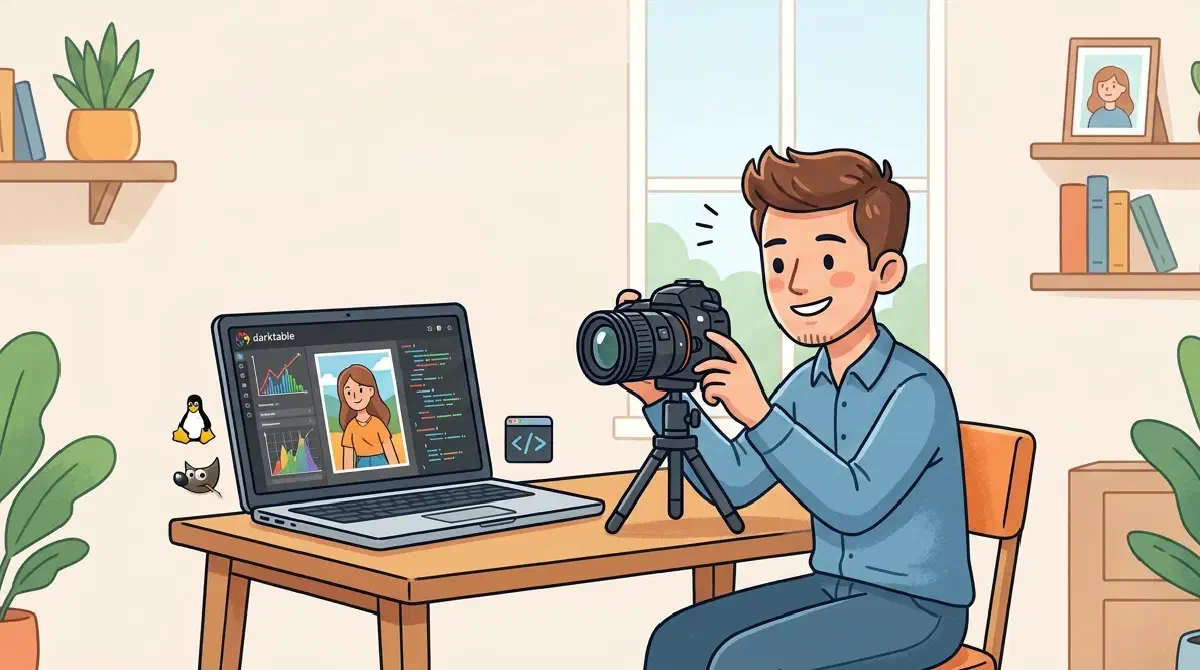
My amateur photographic work focuses mainly on sports, so I decided to buy the Canon EOS R6 Mark III. The problem? At the time of my purchase, the camera was not yet supported by Darktable, my go-to software for RAW processing. I knew the previous model (the R6 Mark II) was supported, but I was in the dark about the new model.
I was torn: should I give up a high-performance model or risk not being able to integrate the shots into my workflow? During my research, I found indications (which later turned out to be a transcription error) that the base library already supported the new model, so I decided to proceed with the purchase.
The Cold Shower and the DIY Solution#
As soon as I imported the first shots into Darktable, the cold shower arrived: the profiles weren’t recognized and the photos appeared with distorted colors. Disappointed, I ramped up my search until I found several Pull Requests and reports on GitHub: other users were trying to implement support for the R6 Mark III within LibRaw, the library used by Darktable. But so far, without success.
What to do? In one issue, a version of Darktable compiled with experimental support for the R6 Mark III was proposed, but unfortunately, it was only available for macOS. I need it for Ubuntu Linux.
This is where the magic happened.
Armed with patience and the fundamental support of an AI, I decided to do what I had abandoned years ago: compile the software from source code.
And so began an adventure filled with attempts, errors, and searching for missing libraries. I would copy the error, ask the AI, install the dependency, and recompile. After several attempts, I did it: I installed a version of Darktable on my machine that “sees” and correctly manages the Canon EOS R6 Mark III. It might not be a perfect configuration, but my workflow is saved, and I can continue working.
Why This Is the True Power of Open Source#
An experience like this would be unthinkable with proprietary software. With a closed-source solution, I would have been forced to wait (who knows how long) for the manufacturer to release an update, remaining at the mercy of their timeline.
With Open Source, however, I had the power to intervene. Thanks to the collaboration of the community (which wrote the code) and the help of the AI (which guided me in the compilation process), I created my own “custom” version.
My hope is that big camera manufacturers will provide active support to Open Source projects from the very day new products are launched. Canon, Nikon, Sony: empower your customers to be free to choose the software they prefer. Supporting Open Source means supporting us users, and it might even increase sales.